
Company Profile
Kegao attaches great importance to team construction and investment of precision equipment. Moreover, the company has strong technical force, complete equipment and advanced technology, such as Mitsubishi and Sodick EDM machine, Japan Mitsubishi and SEIBUOPE Wire Cutting machine, WAIDA-SPG-X Optical Grinding, MAZAK and TAKISAWA CNC Lathe, MAKINO CNC Machining Center, surface grinding machine, centerless grinding machine, ladder grinding machine, outer diameter/inner hole grinding machine.
Why Choose Us
01/
Professional Team
We have introduced a group of senior technicians with production Europe and Japan precision parts experience.
02/
Advanced Equipment
Inspection Equipment include Hexagon three-dimensional detector, Nikon projector, Mitutoyo 2.5D tool microscope, Swiss TRIMOS height gage, Nikon height gage and Hardness Tester for test and measurement.
03/
Rich Experience
Our company has many years of production work experience. The concept of customer-oriented and win-win cooperation makes the company more mature and stronger.
04/
High Quality
Our products have been widely applied in many fields, such as precision medical mould, connector mould, various types of cosmetic mould, PET preform mould, medical apparatus & instruments, jig, etc.
-

Precision Machining Of Plastics And Metals
Precision Machining of plastics and metals At KEGAO Precision Machining you will find the experience, skill and technology you demand to produce precision-machined components for medical, automotive, Add to Inquiry -
Kegao Precision Medical Parts
Dongguan Kegao Precision Technology Co., Ltd. was established in 2007. The company is a precision mold and precision mold accessories integrating R&D, manufacturing, sales and service. Products are Add to Inquiry -
Kegao Metal Spare Parts Mould
Kegao Metal spare parts Mould Nuestra empresa Dongguan Kegao precision Technology Co.Ltd. fue fundada en 2007 años, primero fabricamos principalmente conectores y moldes de conectores. Con el Add to Inquiry -
Medical Metal Mould Precision Mould Spare Parts
Medical Metal Mould Precision mould Spare Parts Medical needle according to buyer's drawing. Contact: Sophia Liew Sales representative Dongguan Kegao Precision Technology Co. Mob: +86 18925540295 Add to Inquiry -
High Precision Metal Mould Spare Parts Chinese Factory
Dongguan Kegao Precisioj Technology Co.Ltd have more than 10 product lines, with more than 82 sets processing equipment and more than 32 sets inspection Equipment from China, Japan, China Taiwan, Add to Inquiry -
Metal Mould Metal Mold Spare Parts Mold
Processing Equipment We are a Precision manufacturers! Mold accessories, hardware accessories, punch products, moulds,automation equipment and accessories, Dongguan KEGAO Precision Technology Co., Add to Inquiry -
High Precision Connector Parts Metal Mold OEM Mould
An experienced team is ready to provide the best Plastic Mold Core and Plastic Mould Part to manufacture custom components with our injection molding and tooling solutions. We can take your product Add to Inquiry -
High Precision Round Parts Of Molds
An experienced team is ready to provide the best Plastic Mold Core and Plastic Mould Part to manufacture custom components with our injection molding and tooling solutions. We can take your product Add to Inquiry -
Mirror Polishing Metal Injection Molding Parts With DLC C...
An experienced team is ready to provide the best Plastic Mold Core and Plastic Mould Part to manufacture custom components with our injection molding and tooling solutions. We can take your product Add to Inquiry -
Slide Mould Insert With Chrome Finish
An experienced team is ready to provide the best Plastic Mold Core and Plastic Mould Part to manufacture custom components with our injection molding and tooling solutions. We can take your product Add to Inquiry -
Hight Polishing Mould Insert
Description: Provide customization Through our long-term close cooperation with customers, so far, we have designed and manufactured many high-precision plastic mold parts for Japan and many European Add to Inquiry -
Hight Accuracy Metal Mould Part
We promise all the parts from our company have no sharp edge. All dimensions are controlled according to your drawings. Every product will be fully inspected and carefully packed to prevent the bump Add to Inquiry

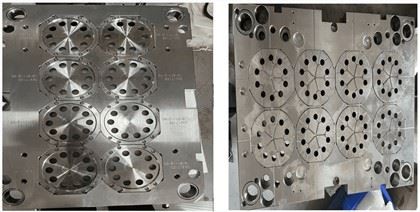


What is Metal Mould?
Metal mold pieces are the result of the casting process, in which the item is formed by pouring metal into an investment mold. These plastic patterns are superior to wax patterns by being smoother, crisper, and more stable.
Metal mold pieces are perfect for consistency and precision. They allow for more intricate designs than die striking while generally being less expensive. Color changes are available by special request.
Metal mold findings assortment includes settings, shanks, trims, earrings, earring components, clasps, jump and split rings, bails, necklace centers, pendants, chain components, dangles and links, and more.
Benefits of Metal Mould
Durability
Metal molds are made from high-strength materials such as steel or aluminum, which allows them to withstand repeated use over extended periods. This durability translates to a long service life and the ability to produce millions of parts before needing replacement or refurbishment.
High Precision
Metal molds can achieve tight tolerances, resulting in parts with consistent and accurate dimensions and features. This is critical for complex parts where precision is paramount.
Surface Finish
Metal molds can produce parts with a high-quality surface finish, often requiring minimal post-processing. The smooth surface of metal molds also helps in reducing friction during the injection or casting process.
Strength and Integrity
Metal molds can impart additional strength to the molded parts due to the heat transfer during the molding process. This can result in parts with better mechanical properties, such as higher tensile strength.
Mass Production
Metal molds are well-suited for large-scale production as they enable the efficient creation of numerous pieces with consistent quality. This makes it ideal for meeting high-demand scenario.
Material of
Iron
With a melting point of 2800 degrees Fahrenheit, iron forms strong permanent molds for the production of numerous metal items. Although less frequently used today than during former eras, cast iron molds still hold utility in some industrial manufacturing processes. For example, this type of mold often casts gold ingot bars at national mints.
Steel
Steel molds also offer long term durability. The composition of the metal alloys used in different steels impacts specific individual melting points. Custom steel molds allow the casting of metal products, glass, plastics, and concrete.
Aluminum
This metal melts around 1220 degrees Fahrenheit. It frequently serves in injection molds used by the plastics industry. Additionally, aluminum molds assist numerous food producers.
Application of Metal Mould
Are widely used in the automobile manufacturing industry
Automobiles are important means of transportation in modern society, and their manufacturing process requires a large number of hardware products. For example, the manufacture of automobile engines requires the use of various precision hardware molds, such as crankshaft molds, cylinder molds, etc. These molds can ensure the accuracy and quality of the engine and improve the performance and reliability of the car. In addition, the manufacture of automobile bodies also requires the use of hardware molds, such as stamping molds, welding molds, etc. These molds can help companies achieve efficient production and improve the manufacturing speed and quality of automobiles.
Have important applications in the home
With the improvement of people's living standards, the demand for home appliances continues to increase. Hardware molds play a vital role in the manufacturing process of home appliances. For example, the manufacture of refrigerators requires the use of stamping molds, injection molds, etc. These molds can help companies achieve efficient production and improve the quality and appearance of products. In addition, the manufacture of home appliances such as washing machines and air conditioners also requires the use of hardware molds, which can help companies improve production efficiency, reduce costs, and improve product competitiveness.
Also widely used in the construction industry.
The construction industry is a pillar industry of the national economy, and its development is of great significance to the stability and prosperity of the national economy. The application of hardware molds in the construction industry is mainly reflected in the manufacturing process of building materials. For example, steel bar molds are needed to manufacture steel bars, and cement molds are needed to manufacture cement products. These molds can help companies achieve efficient production and improve the quality and appearance of products. In addition, hardware molds can also be used to manufacture building appliances, such as doors, windows, stairs, etc.
Metal Moulding Technics---Casting and Forging
Die casting (note that die casting is not short for pressure casting) is a metal casting process characterized by the use of die cavity to apply high pressure to molten metal. Molds are usually made of stronger alloys, a process somewhat is similar to injection molding.
Sand mold casting is to make mold with sand. The sand mold casting needs to put the finished part model or wooden model (shape) into the sand, and then fill the sand around the shape, and the sand will form the mold after the appearance is taken out of the box.
Investment casting is also called lost waxing casting, including wax pressing, wax fixing, tree forming, dipping, wax melting, casting metal liquid and post-treatment. Lost wax casting is to use wax to make the wax mold of the part to be cast, and then the wax mold is coated with mud, which is mud mold. The clay mould is baked into pottery mould after drying. Once roasting, the wax mould all melted away, leaving only the ceramic mould. Generally speaking, the casting port is left behind when making mud mould, and then the metal molten liquid is poured into the pouring port. After cooling, the required parts are made.
Low pressure casting is a method for filling and solidifying liquid metal casting with low pressure gas. Low pressure casting was mainly used in the production of aluminum alloy castings at the beginning, and further expanded its use in the production of high melting point copper castings, iron castings and steel castings.
Centrifugal casting is the technology and method of injecting liquid metal into the high-speed rotating casting mold and filling the mold and forming casting with metal liquid under the action of centrifugal force. Used in casting, centrifugal casting on the casting shape, size and production batch is different, can choose non-metallic type (such as sand, shell mold or casting shell mold), metal mold, or apply in metal mold coating or resin sand casting.
Lost foam casting combines the paraffin or foam model similar in shape and shape to the model cluster. After brushing the refractory paint and drying it, it is buried in the dry quartz sand to vibrate and cast under negative pressure to vaporize the model. A new casting method in which liquid metal occupies the position of the mold and solidifies and cools to form a casting. Lost foam casting is a new process with no margin and precise molding. The process does not require mold taking, no parting surface, no sand core, so the casting has no flashes, burrs and draft angles, and the size errors caused by combination between shape and core are also reduced.
Squeeze casting is also known as liquid die forging, is the direct injection of a molten metal or semi-solid alloy into an open mold, followed by closing the mold to create a filling flow, reaching the outer shape of the part, and then applying high pressure to solidify. The metal (outer shell) is plastically deformed, the unsolidified metal is subjected to isostatic pressing, and at the same time, high pressure solidification occurs, and finally the method of obtaining the part or the blank is obtained by direct extrusion casting; and the indirect extrusion casting means that the molten metal or the half is molten. The solid alloy is injected into the closed mold cavity through a punch, and is subjected to a high pressure to crystallize and solidify under pressure, and finally a method of obtaining a part or a blank is obtained.
How to Maintain Metal Mold
Metal Mould are used in industrial production, using various presses and special tools installed on the presses to make metal materials into parts or products of the required shape through pressure. Such special tools are collectively called hardware molds. Hardware molds are widely used in our lives, but there are always a series of problems. So, in response to this problem, the editor will teach you how to maintain hardware molds.
- After using the Metal Mould for a long time, we will find that the cutting edge must be sharpened. After grinding, the cutting edge surface needs to be demagnetized again. It cannot be magnetic, otherwise it is easy to cause blockage.
- Check the fastening parts of the Metal Mould to check whether the fastening parts are loose or damaged. If there are these situations, the method to be adopted is to find parts of the same specification for replacement; check whether the screws, fixing pins, etc. are loose, whether they will jump out and explode the mold, and tighten them with a wrench if they are loose.
- During the use of the mold, the punch is prone to breakage, bending and gnawed, and the punch sleeve is generally gnawed. The damage of the punch and punch sleeve also needs to be replaced with parts of the same specification.
- Check the tightness of the guide device and add lubricating oil to prevent the mold from overheating and roughening; perform anti-rust treatment on the hardware molds that are not in production.
- During the maintenance and maintenance of the pressing parts and unloading parts, pay attention to check whether the accessories of each part are damaged, and repair and update the damaged parts.
Our Factory
R&D, production and sales, automation equipment and accessories, mold accessories, hardware accessories, punch products, plastic products.
Our products have been widely applied in many fields, such as precision medical mould, connector mould, various types of cosmetic mould, PET preform mould, medical apparatus & instruments, jig, etc.


FAQ
We're professional metal mould manufacturers and suppliers in China, specialized in providing high quality customized products. We warmly welcome you to buy custom made metal mould at competitive price from our factory. Contact us for more details.
